Pinout breakdown for Porter Cable 20V packs, what each contact does

May 5, 2026
59
0
6
toolcroze.com
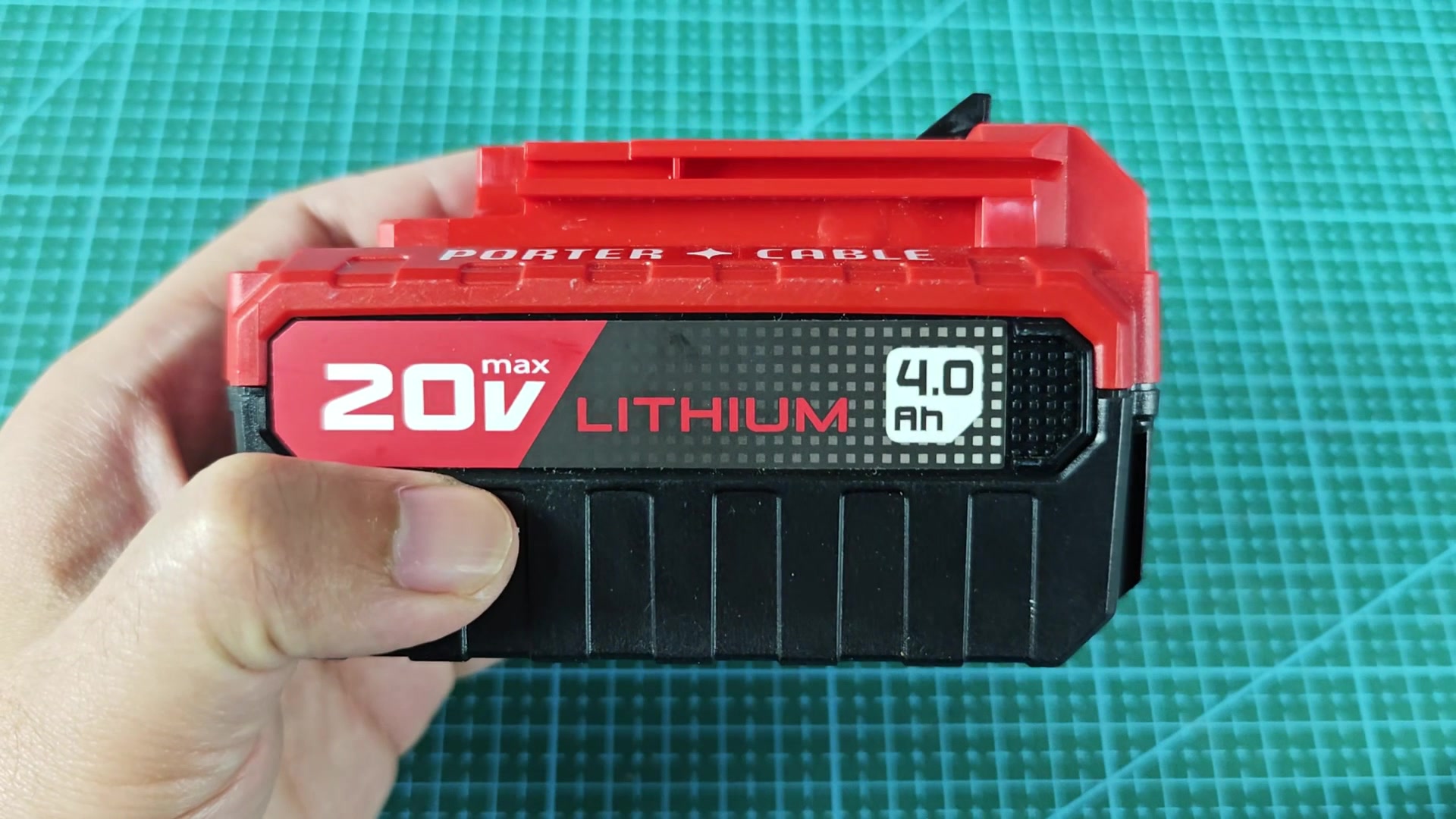
The pinout on the Porter Cable 20V batteries doesnt get talked about much, so figured I'd toss in what I found into the thread for anyone else digging into these pack.
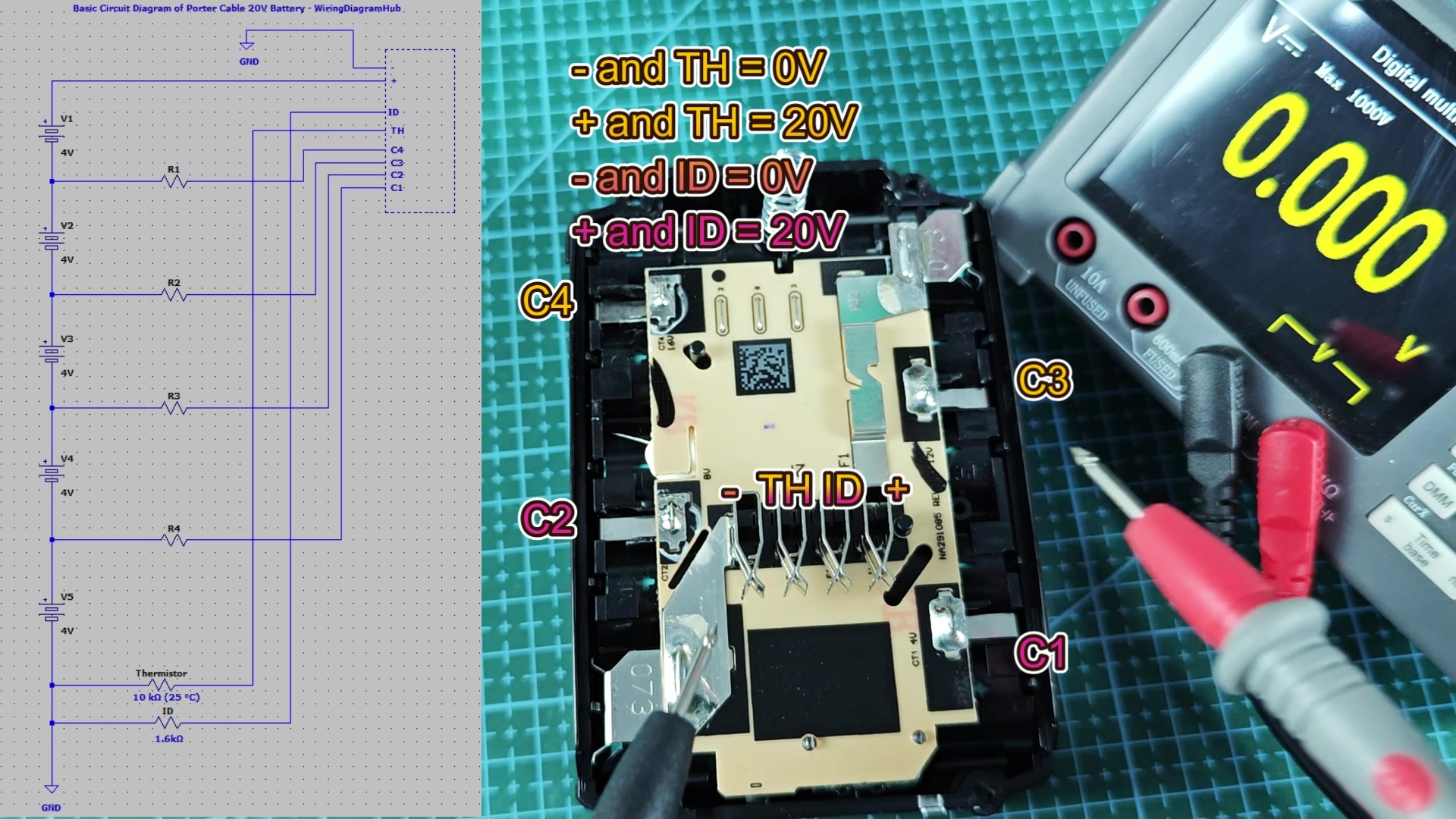
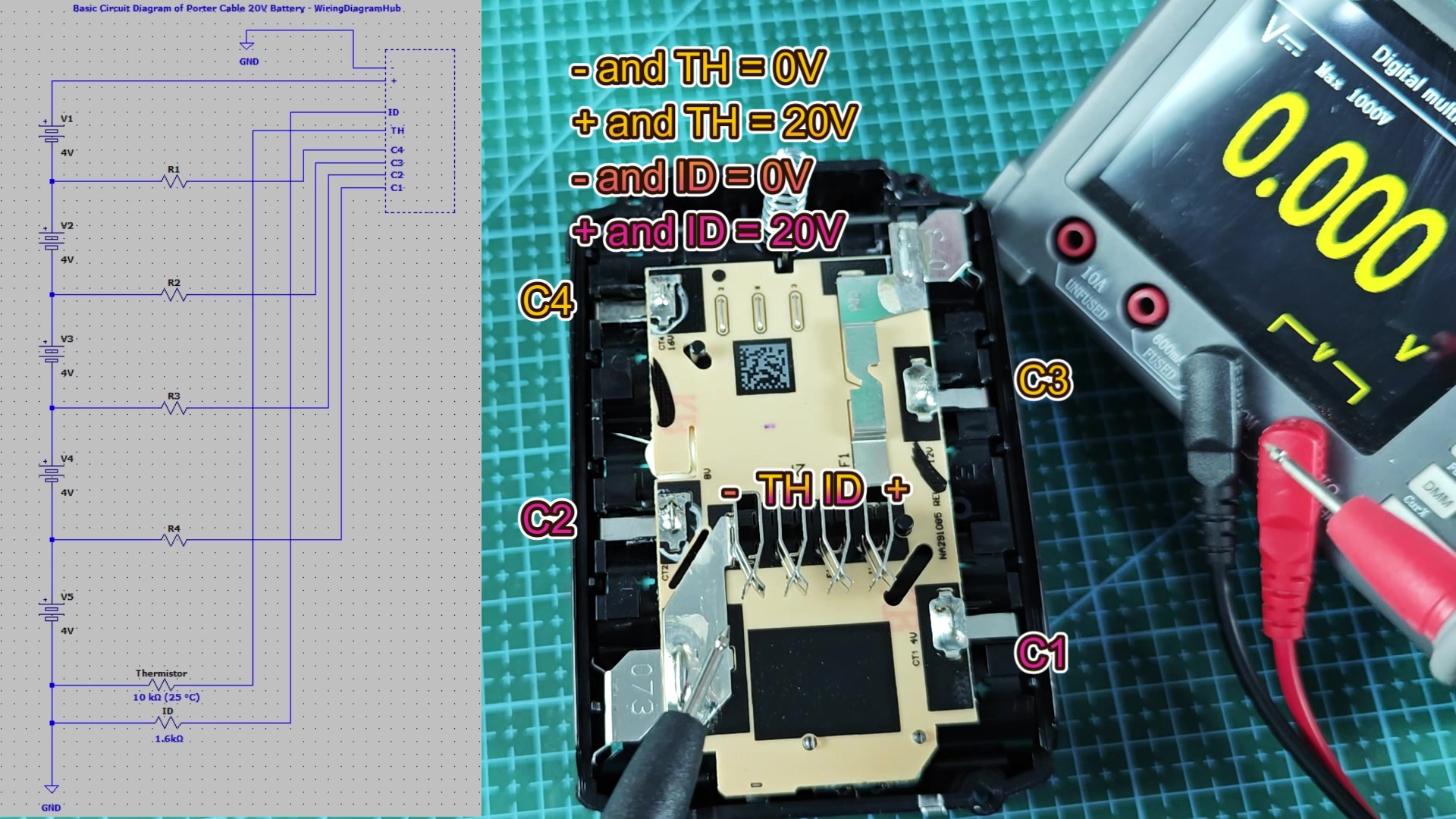
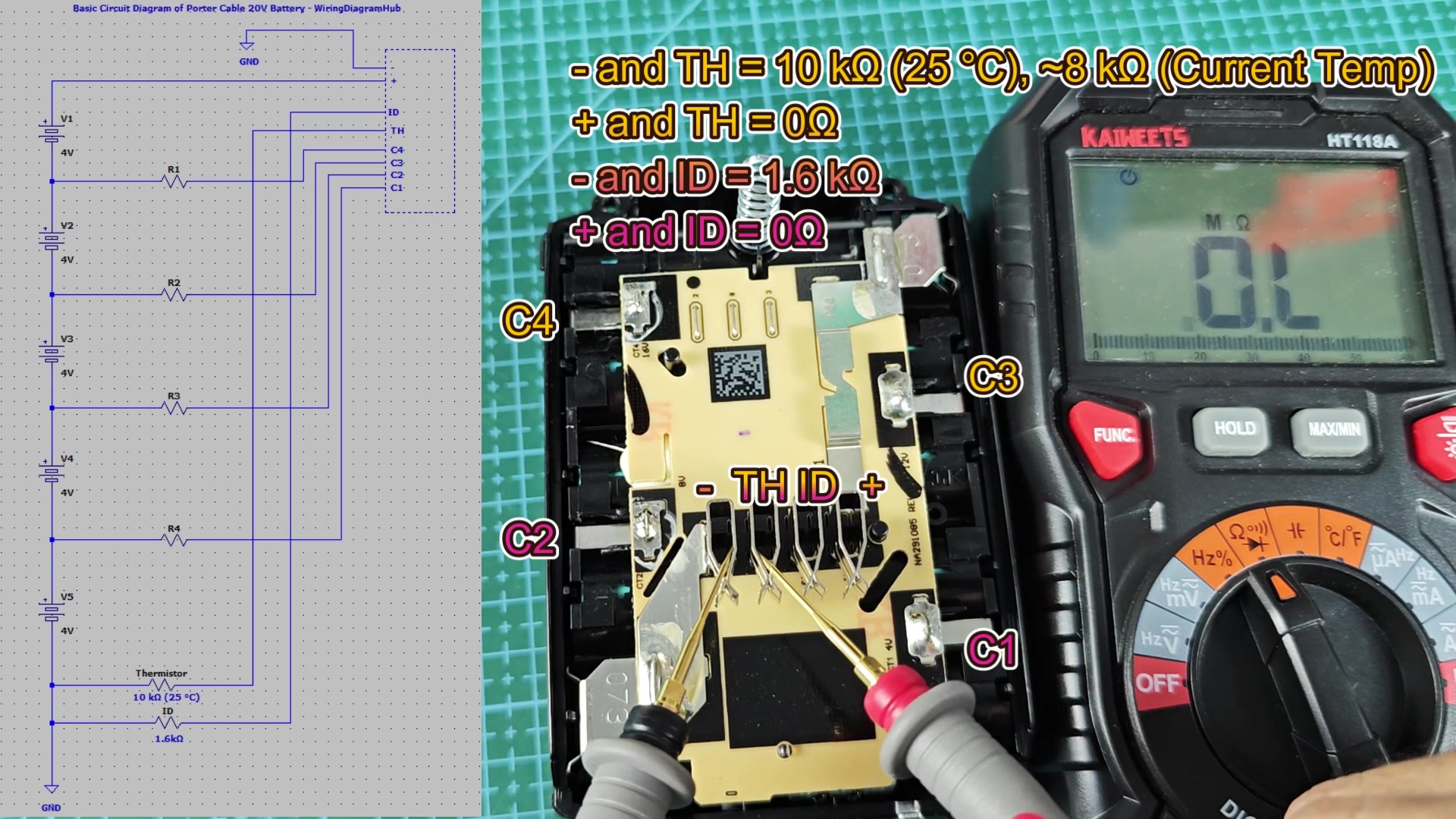
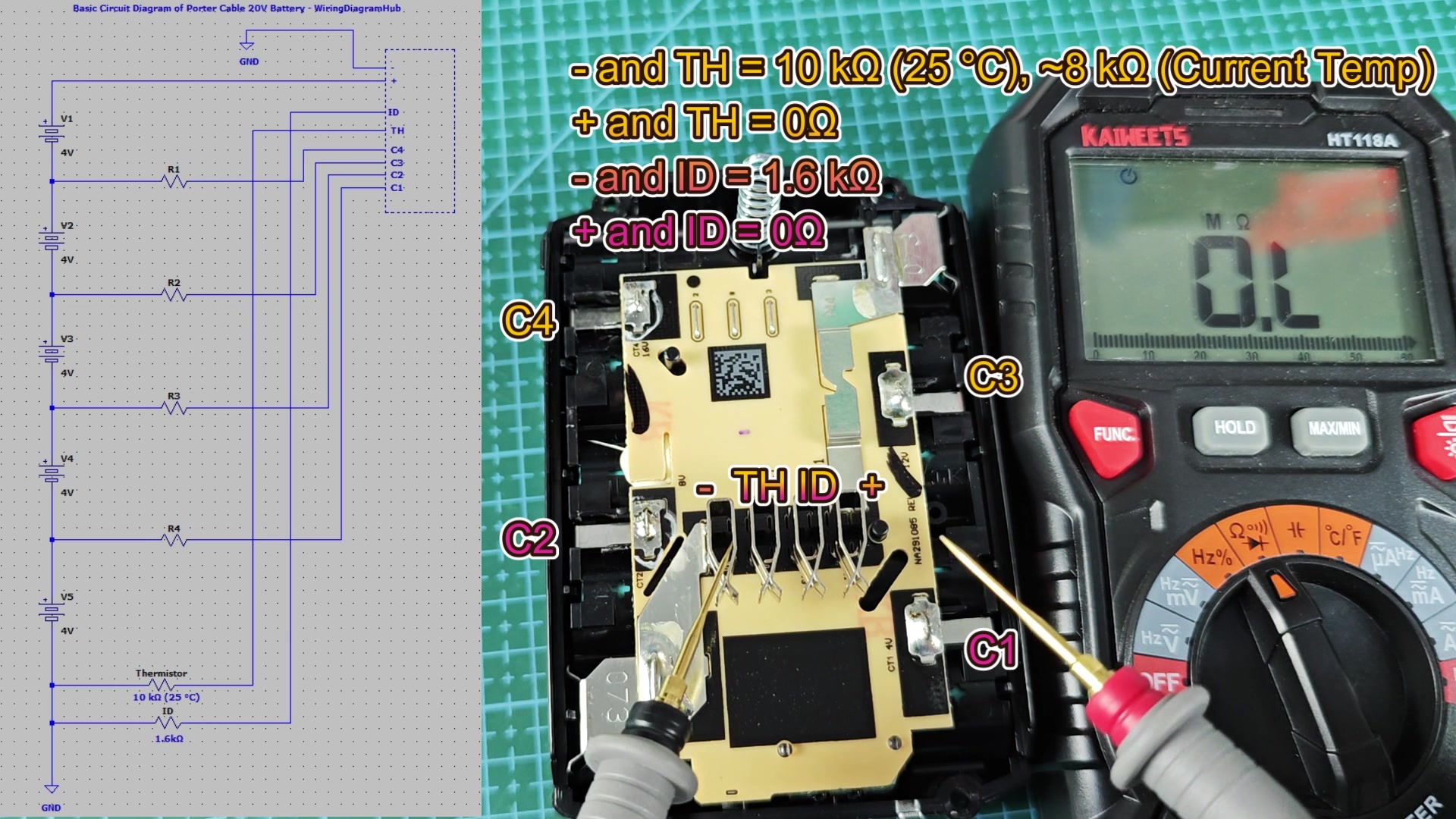
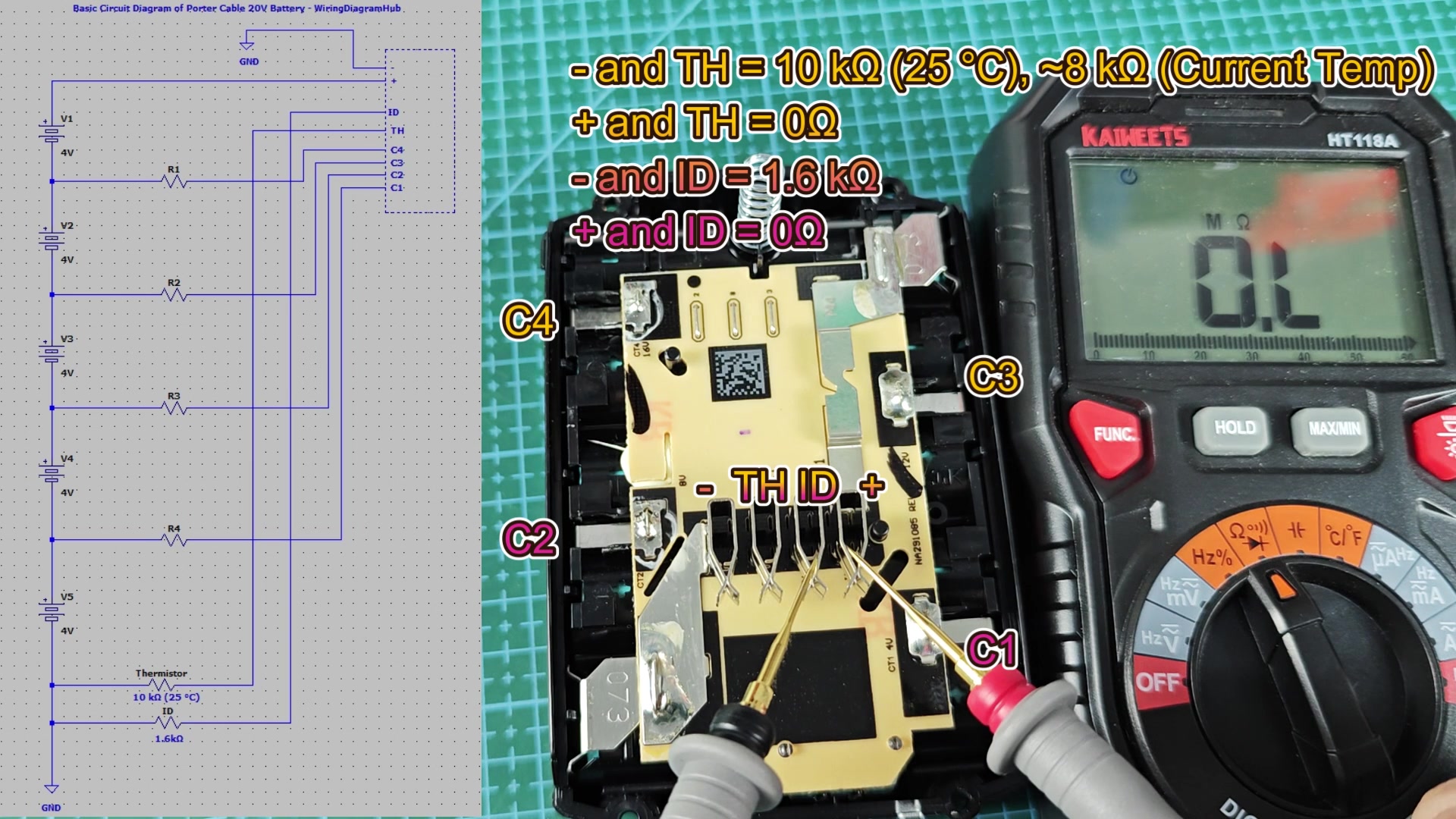
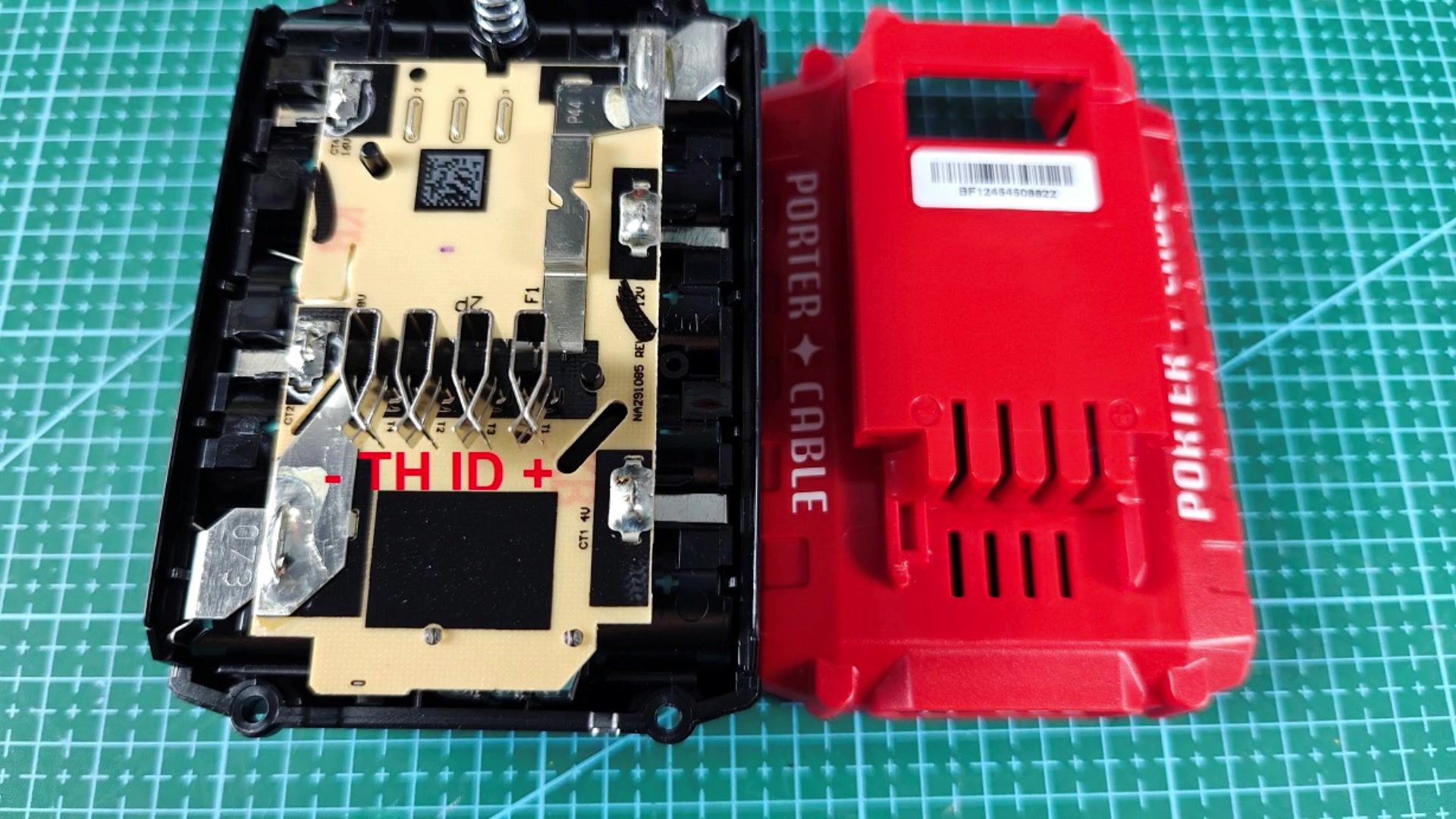
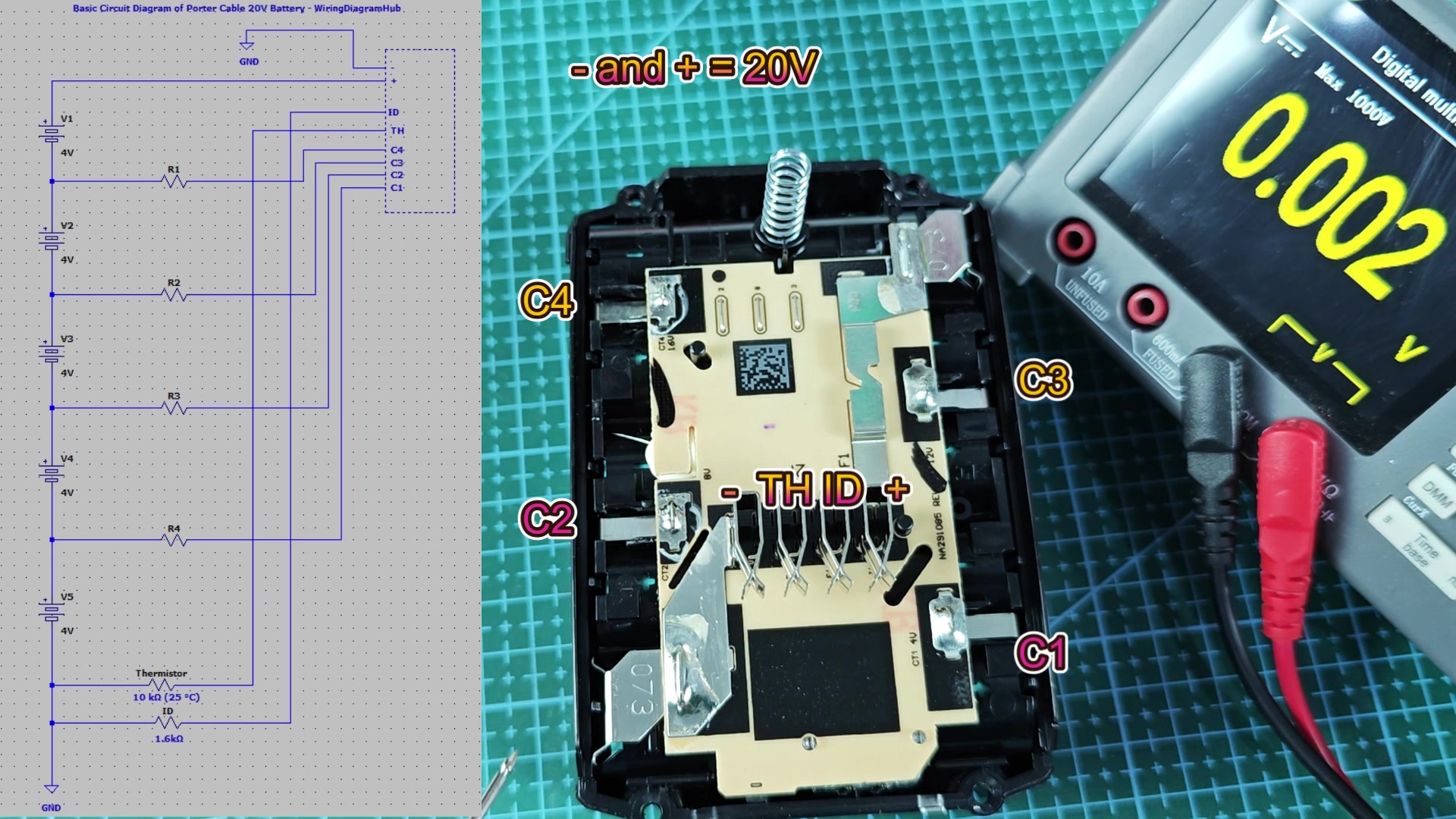
The standard layout for these batteries are as follows:
is the obvious positive terminal (for power)
is an obvious negative terminal (for power)
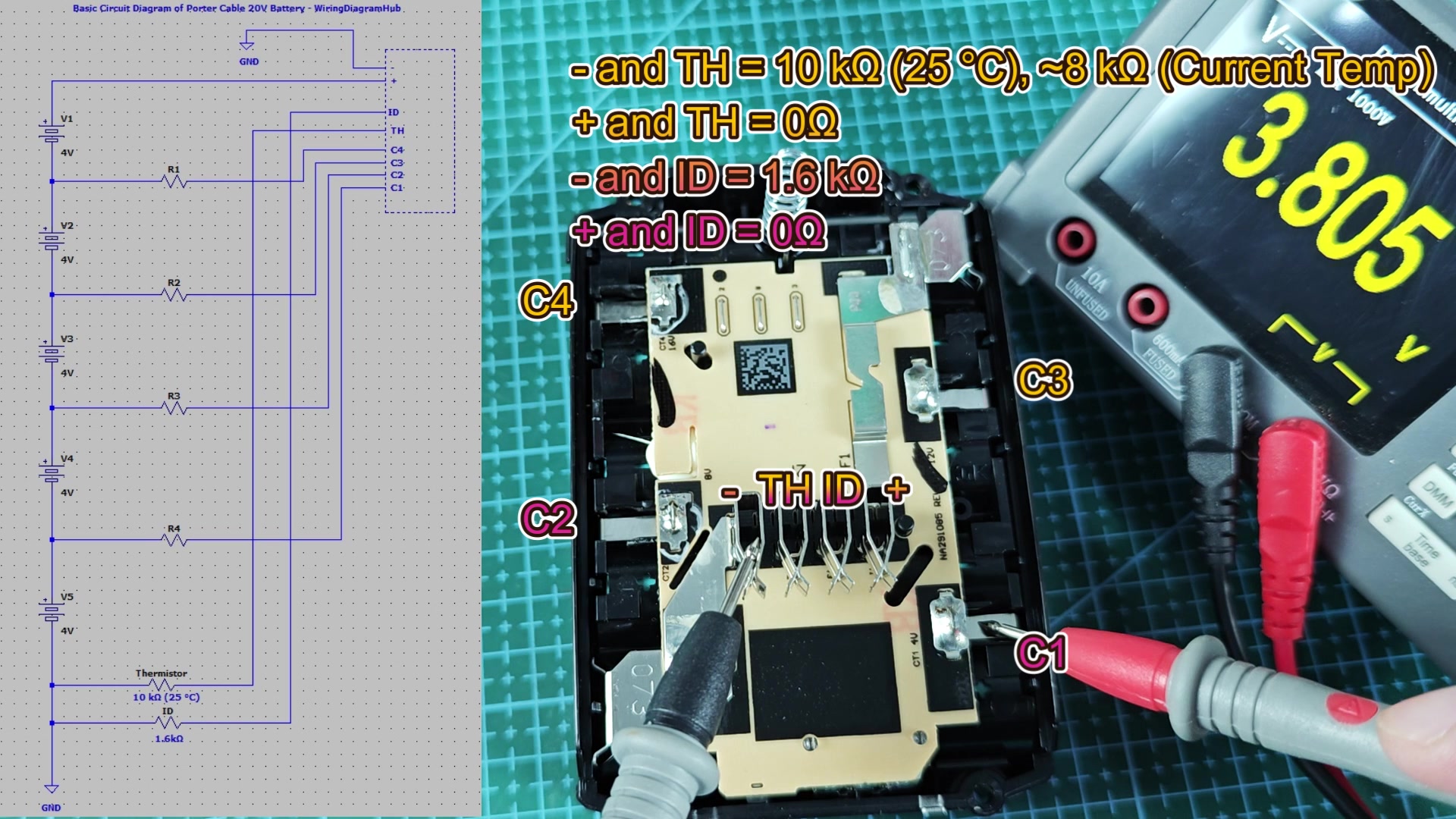
ID is an identification pin for the tool to recognize the battery as the correct and legitified product
TH is a thermistor pin to allow the tool to monitors the temperature of the battery
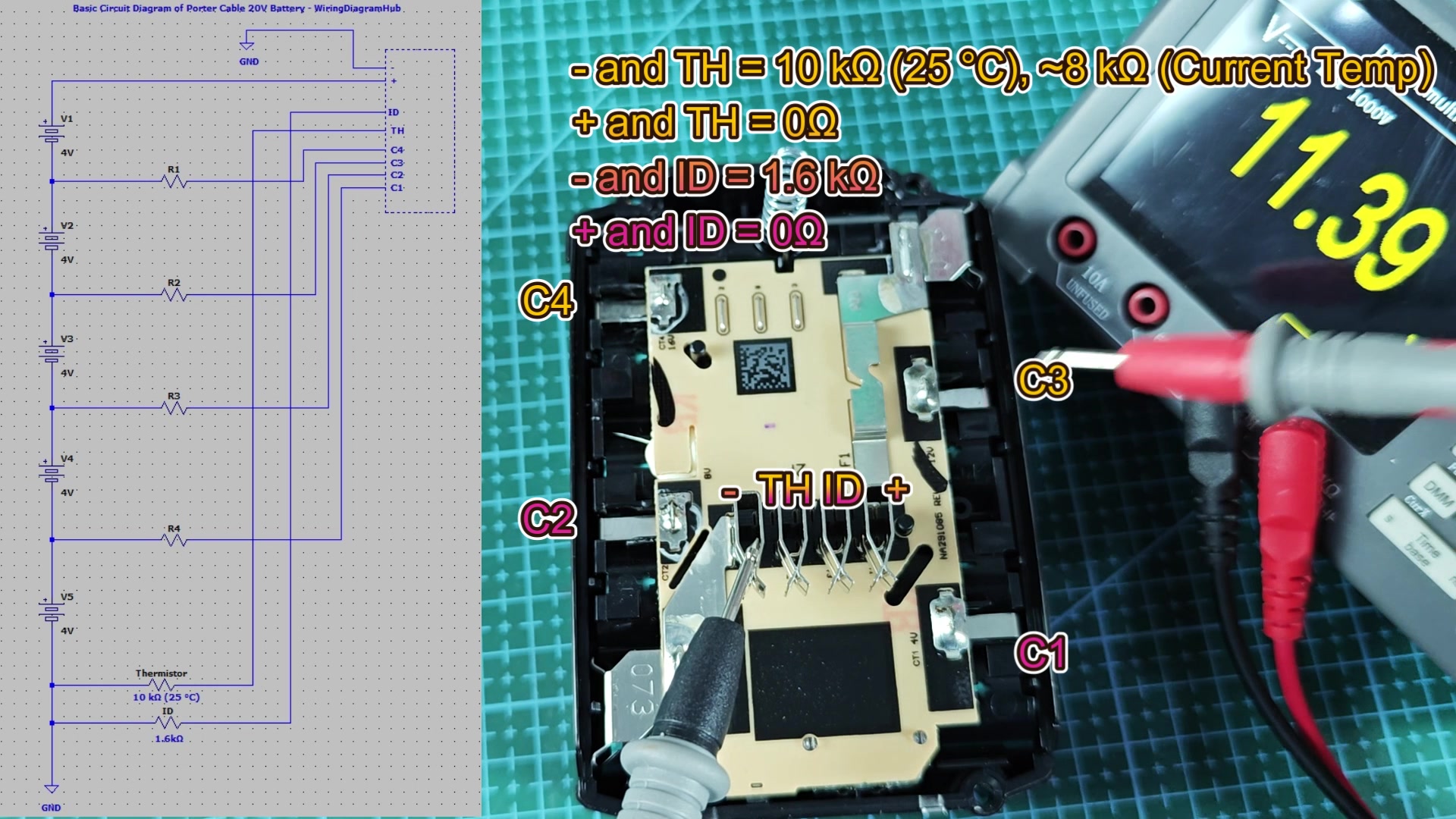
C1-C4 are junction pins for each of the 5S battery cell group to allow the BMS to balance each group individually
pinout-breakdown-for-porter-cable-20v-packs-what-each-contact-does-1.jpg

pinout-breakdown-for-porter-cable-20v-packs-what-each-contact-does-2.jpg

pinout-breakdown-for-porter-cable-20v-packs-what-each-contact-does-3.jpg

pinout-breakdown-for-porter-cable-20v-packs-what-each-contact-does-4.jpg

pinout-breakdown-for-porter-cable-20v-packs-what-each-contact-does-5.jpg

pinout-breakdown-for-porter-cable-20v-packs-what-each-contact-does-6.jpg

pinout-breakdown-for-porter-cable-20v-packs-what-each-contact-does-7.jpg

pinout-breakdown-for-porter-cable-20v-packs-what-each-contact-does-8.jpg

pinout-breakdown-for-porter-cable-20v-packs-what-each-contact-does-9.jpg

pinout-breakdown-for-porter-cable-20v-packs-what-each-contact-does-10.jpg
 
The ID pin for these batteries seem to be a fixed resistor, not a data pin for the tool. I havent seen any clock data on the pin when the tool is engaged.
 
The same platform is used for B&D and Porter Cable 20V batteries. The same info applies to both brand. The ID pin for B&D is a resistor only; I've done three battery rebuilds using these original BMS boards.
 
The same platform is used for B&D and Porter Cable 20V batteries. The same info applies to both brand. The ID pin for B&D is a resistor only; I've done three battery rebuilds using these original BMS boards.

wait so if its just a resistor could you in theory just solder a resistor of the right value onto a generic BMS and trick the tool into thinking its seeing the original battery? or does the tool also test the TH pin?
 
wait so if its just a resistor could you in theory just solder a resistor of the right value onto a generic BMS and trick the tool into thinking its seeing the original battery? or does the tool also test the TH pin?

Yeah, it will first test the ID pin to recognize the battery. After that, the tool will continuously monitor the TH pin while in use. As long as the battery reads in a normal range (close to room temperature) the tool will not care what it reads on that pin; it will only recognize if it goes above the threshold.
 
why does anyone bother rebuilding these. You can find used packs for cheap all day on marketplace
 
I metered the TH pin on my Porter Cable 20V packs last year and the value is a standard 10k NTC (negative temperature coefficient) resistor; reads around 10k at room temperature.
 
I metered the TH pin on my Porter Cable 20V packs last year and the value is a standard 10k NTC (negative temperature coefficient) resistor; reads around 10k at room temperature.

^ this confirms what I'm thinking about these batteries. Its bog standard engineering. No need to reinvent the wheel for a budget brand.
 
I metered the TH pin on my Porter Cable 20V packs last year and the value is a standard 10k NTC (negative temperature coefficient) resistor; reads around 10k at room temperature.

is the 10k NTC the B value 3950 type or the 3380 type? does the tool BMS care which one is used as long as the cold resistance value match?
 
You're overthinking it. The BMS has the value of the resistor right next to the ID pin; I've done 15 battery rebuilds on Porter Cable 20V and every single one was a fixed resistor. Porter Cable doesnt engineer their batteries in house, they are essentially rebadging products from other brands.
Just measure across the ID pin and the B- pin with the BMS disconnected from the battery and youll have your answer in 5 second.
 
lol at the idea of porter cable engineering a one wire data connection between the BMS and the tool. These are the entry level pack from porter cable; not the XGT model line from the company.
 
lol at the idea of porter cable engineering a one wire data connection between the BMS and the tool. These are the entry level pack from porter cable; not the XGT model line from the company.

ok but what if you wanted to put a porter cable cell group into a dewalt shell; would the value of the resistor be the same or are they using different values of resistors on their brands?
 
ok but what if you wanted to put a porter cable cell group into a dewalt shell; would the value of the resistor be the same or are they using different values of resistors on their brands?

Different values of resistors for each brand is almost guaranteed. It's a means of locking their tools to their brand; a means of preventing users from using their tools with batteries from other brand.
 
Just wanted to chime in to note that the C1-C4 pins are NOT meant to carry any current. I've seen people try and use these as the charge points for their pack or even pop the sense traces on the BMS to allow for balancing of the cells by doing this. These are only meant to be voltage reference points for the BMS to allow for balancing of the cells in series.
 
thier balance circuit is pretty weak on these; they will only allow 50mA at most to balance the cells. If the cells are out of whack with the voltage of the other cells its better to balance the cells with a hobby charger prior to reassembling the batteries.